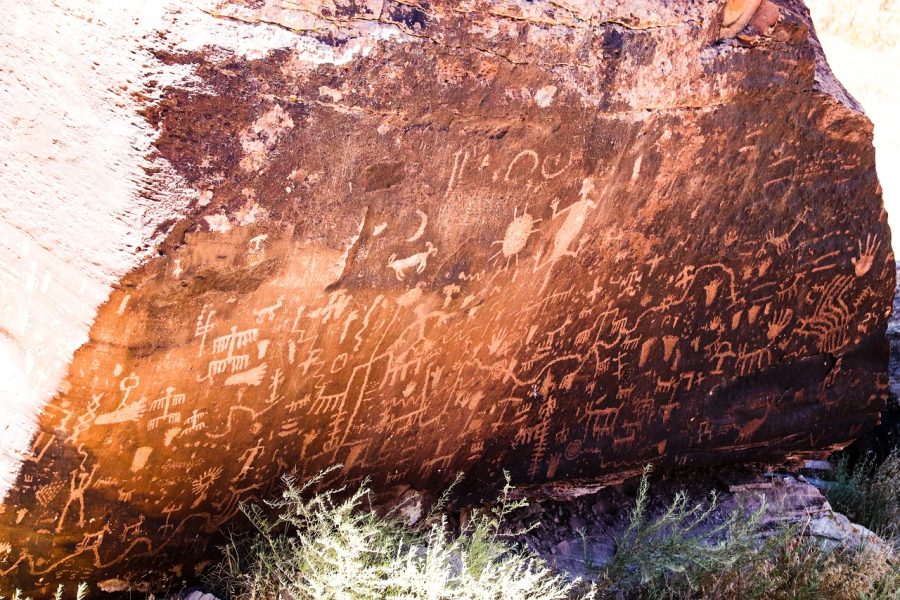
Most countries of the Americas and elsewhere, including the United States, are celebrating Columbus Day today, a holiday that celebrates the arrival of Christopher Columbus in the Americas on Oct. 12, 1492. The United States celebrates the occasion by giving federal workers the second Monday in October off.
But 10 states and more than 100 cities across America have officially rejected recognizing Columbus Day and instead officially recognize Indigenous Peoples’ Day, thus honoring America’s native population whose demise began with Columbus’ arrival.
Joining those states and cities are 10 other states that officially recognize the day without making it an official holiday, plus President Biden, who signed a proclamation honoring the Indigenous People.
The commemoration officially recognizes that America’s Original People suffered atrocities forced on them by the white European invaders, how they fought valiantly despite impossible odds (the white man had rifles and they didn’t, end of story), and their contributions to America’s society.
Indigenous People want us to see the story of America from their point of view, which is a far different story than most of us learned in school. They call that story a baldfaced lie. It was written by the victorious white European invaders to glorify themselves with little regard for truth, and they want us to hear their story anew and reflect on it. They feel they have been invisible in everyday American life, and until they are fully seen, until their story is fully recognized, the rest of us will never see their real issues and real concerns, and justice will never be done.
And today, Inaugural Peoples’ Day, is a good day for all of us, but especially all of us white folks, to take a few moments and do just that. We owe them that much. But first a warning: For those of us who grew up sainting our Founding Fathers, this can be painful reading.
Most histories of the United States tell how Columbus’ discovered America, and from there they tell of how Europeans converted a wild world into a new form of government, a government of the people, by the people and for the people, a society in which all people would be free.
The Indigenous People don’t dispute the European’s version of history – the who-what-where-when of it – but they do very strongly dispute its essence, its truth.
Begin with the word “discovery” that the European writers used. Indigenous People point out that Columbus discovered nothing. They were here long before he was and they deserved to be recognized for it.
As for “wild world”, Indigenous People laugh. Indigenous Person and author Roxanna Dunbar-Ortiz explains: “European colonialists shoved aside a large network of small and large nations whose governments, commerce, arts and sciences, agriculture, technologies, theologies, philosophies, and institutions were intricately developed nations that maintained sophisticated relations with one another and with the environments that supported them.” They lost all that because the white man had rifles and they didn’t.
And as for that “society in which all people would be free,” Indigenous People see a history of cruel colonialism, a state that was founded on white supremacy, developed on the backs of enslaved Black people, and grew into full power through a policy of land theft and genocide.
Even “land theft” and “genocide” are pathetically weak words to describe what happened.
Land theft: Indigenous People once occupied an estimated 21 million square miles of land across the contiguous United States, and 99 percent of it was stolen from them.
Genocide: The newly arrived Europeans tried to exterminate them, and they almost succeeded. The invaders starved them by burning their crops and slaughtering their main source of food, the buffalo; unmercifully massacred their unarmed women and children; and purposefully introduced diseases they knew would kill large numbers of them.
But it wasn’t only the early settlers. The Indigenous people see America’s Founding Fathers as being such white supremists that they had the audacity to say that “all men are created equal” when what they really meant was all white men were created equal, and preferably white men who owned land. They clearly did not consider white women or Black men or women as created their equal,
In her book An Indigenous People’s history of the United States, author Dunbar-Ortiz names the worst offenders, using their own words and actions to back up her accusations. She singles out George Washington, Thomas Jefferson, John Calvin, Andrew Jackson, James Monroe, Abraham Lincoln, Walt Whitman, John Smith, William Sherman, Robert E. Lee, Frank Baum, Theodore Roosevelt and others.
There is nothing we or they can do about that history now. History cannot be changed. But land deals can be changed, and that’s what today’s Indigenous People want. They want their stolen land back. The government once offered them money but they refused. They only want their land, and they want it now.
That’s why they want the rest of us to hear their side of the story anew and reflect on it. These are the real issues and concerns they face, but they cannot succeed without us understanding and being aware of them, and helping as we can.
And with an ever-growing number of us joining the effort, they’re beginning to get their wish, one significant chunk of land after another. Three examples:
- In Montana, the U.S. Department of Interior restored more than 18,880 acres of land known as the National Bison Range to Indigenous tribes.
- In California, a land trust transferred 1,199 acres of redwood forest and prairie to the Esselen tribe.
- Also in California, a class-action lawsuit filed by Elouise Cobell on behalf of 300,000 Native citizens led the government to commit $1.9 billion to help tribal governments re-acquire some 3 million acres of stolen land.
Maybe things are finally beginning to look up for our long-persecuted Indigenous People.
Have a good Indigenous Peoples’ Day.
(Clarification: My indication in last week’s blog {Founders Wanted God in State, 10/2/23} I did not make clear why I would like for religion to be taught in public schools and for religion to underpin our government. I want what the Founders wanted, which was that religion be taught in public schools, but only those religious tenets that are universally accepted by all major faiths. The Founders understood that all faiths share some fundamental points, namely that if you’ll love your neighbor, you’ll be happier and the world will be better. That’s the religion I would like taught in our schools and underpinning our government. I apologize for not being clearer.)
provided each week by the folks at GrowPurpose.com
- Indigenous Peoples’ Day – National Today
- Indigenous Peoples Day offers a reminder of Native American history − including the scalping they endured at the hands of Colonists
- In Advance of Indigenous Peoples’ Day, 33 Members of Congress Send Letter to President Biden Seeking Leonard Peltier’s Release
- What Indigenous Peoples’ Day means to Native Americans
- Native Knowledge 360°—Unlearning Columbus Day Myths: Celebrating Indigenous Peoples’ Day
- 10 things to know about Indigenous peoples – United Nations Development Programme
- GOP-backed bill to celebrate Indigenous People’s Day in August draws opposition
- How Italian Immigrants Used Columbus to Become White Americans
- Tensions persist between legacy of Columbus, native people
- Flathead Memo: Opposition to Indigenous Peoples’ Day is not proof of racism

Bravo, Mr. Johnson. It is exactly what we need to read on the former Columbus, now Indigenous People’s, Day!! I am taking the liberty of posting it on Facebook.
Great article! I am reading An Indigenous Peoples’ History of the United States. I am learning quite a lot!