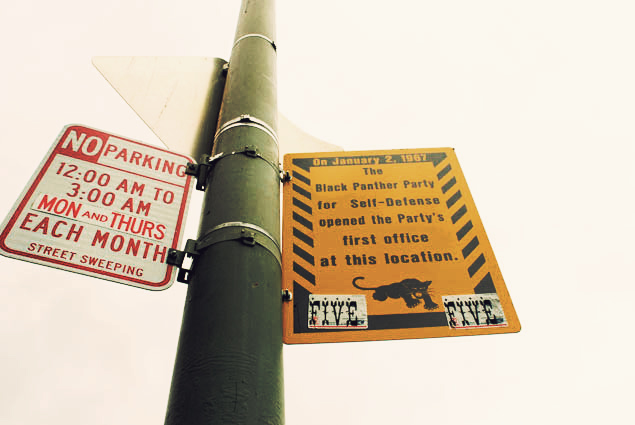
Black Panther Party Examined in New Documentary Film
‘The Black Panthers: Vanguard of the Revolution’
Check out the new documentary film about the rise and fall of the Black Panther Party by award-winning film maker Stanley Nelson.

‘The Black Panthers: Vanguard of the Revolution’
Check out the new documentary film about the rise and fall of the Black Panther Party by award-winning film maker Stanley Nelson.

This video of H. Rap Brown discussing politics and movements in the United States with Gil Nobel. The interview has a lot of resonance with the issues we focus on today. He discusses elections not being an effective way to advance our cause; and even says that if we were to ever elect a black president, we would need to be prepared to protest him because it is the system that is broken. He also discusses the media and how it is not a vehicle for telling the truth about revolutionary political change. He also discusses movement leadership and growth. He describes the movement as one without leaders but there are people who provide ideas but do not tell people what to do. He says movements must provide people with services the government is failing to provide to bring people to the movement. He sees movements as building from the bottom up, led by people who are oppressed. H. Rap Brown, was chairman of the Student Nonviolent Coordinating Committee in the 1960s, and during a short-lived (six months) alliance between SNCC and the Black Panther Party, he served as their Minister of Justice. He is currently serving a life sentence for murder following the 2000 shooting of two Fulton County Sheriff’s deputies, both African-American. He continues to deny the murder. The interviewer Gil Nobel has a weekly show on WABC-TV in New York called “Like It Is.”

From the Creosote Journal:
“There are few external markers to show you what David Hilliard knows about certain places in Oakland. He knows where to find the bullet holes that still pockmark a house, puncture a fence railing. As Hilliard tells it, he was hiding in a house nearby, one night in 1968, shortly after the murder of Martin Luther King, Jr. He listened as some 1,900 rounds were emptied by the police force.”